
If you care, you’re qualified to be a councillor
By Amanda Amaeshi
“As a councillor, you get really quick responses. The doors are open so you can be that conduit to the community.”
“I had absolutely no plans of becoming a politician or standing for election.”
These are the words of two women currently serving as councillors across Scotland…
I heard their perspectives first-hand while facilitating two Elect Her ‘Be A Councillor’ online workshops on Thursday, 4 June. The workshops were designed to demystify both the process of becoming a councillor and what life in the role is actually like.
Through my work on gender equality, anti-racism, and youth participation, I've long been interested in who gets to shape decisions and whose voices are represented in public life. Politics touches every aspect of our lives, and who sits at decision-making tables can profoundly shape whose needs are prioritised and how policies are designed and implemented.
Gender equality in politics cannot be taken for granted. Following the most recent Holyrood elections, the proportion of women MSPs decreased. The picture is even more stark at local government level, where decisions often have the most immediate and tangible impact on people's lives. Only 35% of Scotland’s councillors are women, despite women making up 51% of the population. The figures are even lower for young women, with fewer than 15% of all councillors in Scotland aged between 18 and 44.
Council elections rarely attract the same level of attention as national elections, yet councillors can significantly influence the quality of local people’s lives. People with a wide range of experiences and perspectives need to put themselves forward for election, so that councils better reflect the communities they serve and bring a broader range of voices into local decision-making.
Before facilitating the workshops
Before facilitating the workshops, I realised that while I had a broad understanding of local government, there was still so much I didn't know about the realities of being a councillor. Reading through the facilitator briefing and Elect Her’s handbooks gave me a much deeper appreciation of the role. What really brought those insights to life, though, was hearing directly from women currently serving in local government.
Across the two workshops, participants heard from:
Councillor Kirsten Robb (Scottish Greens) – East Kilbride East, South Lanarkshire Council
Councillor Sally Pattle (Scottish Liberal Democrats) – Linlithgow, West Lothian Council
Bailie Dr Soryia Siddique (Scottish Labour) – Southside Central, Glasgow City Council
Councillor Laura Murtagh (Independent, formerly Scottish National Party) – Carse, Kinnaird and Tryst, Falkirk Council
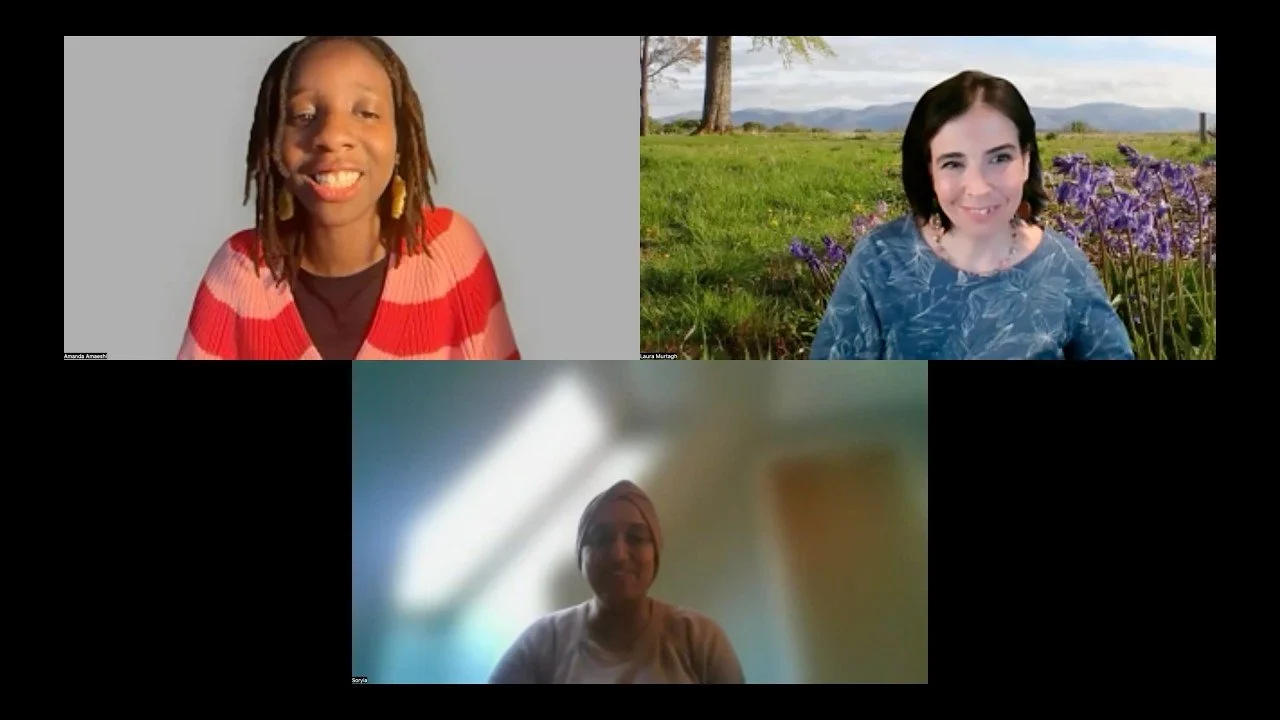
Although their journeys into local politics were very different, each speaker brought valuable insights from their experiences as councillors.
Rather than presenting an idealised picture of local politics, they spoke candidly about both the rewards and challenges of the role. Together, their contributions made for two fascinating discussions that I could have listened to for many more hours, if not for everyone's jam-packed schedules!
While no single summary can do justice to the full conversations (you’ll find links to both workshop recordings at the end of this blogpost), a few key insights particularly stayed with me:
You don’t need to fit a particular mould to become a councillor – Kirsten emphasised that councillors learn on the job rather than arriving fully formed, while Laura reflected that people bring valuable experience from all parts of their lives into the role, describing parents in particular as “fantastic project managers” because of the constant organising, juggling, and decision-making involved.
The reality of local politics is often more nuanced than party labels suggest – In Sally’s experience, priorities are often shaped by listening to residents and responding to local concerns, rather than strictly party political agendas, while Soryia highlighted the different opportunities for influence in administration and opposition.
Impact happens at multiple levels – Laura’s examples ranged from influencing how equality is considered across council decision-making to helping a family secure a ramp for a relative with MND. Kirsten similarly highlighted both individual casework and broader decisions about using council resources strategically to address issues such as fly-tipping and community amenities.
You cannot do everything, so prioritisation becomes a core skill – Soryia reflected on balancing elected office with an academic career, while Sally highlighted the importance of setting boundaries and making space to recharge, from protecting Sundays as non-work time to keeping her yoga or swimming kit in the car so she can make use of small windows of time.
Flexibility is often what makes the role sustainable – Councillor life rarely follows a predictable schedule. Kirsten highlighted the flexibility to organise work around family responsibilities, while Sally described taking council meetings from her car between other commitments, illustrating how councillors often have to adapt constantly to competing demands on their time.
Resilience and self-compassion matter in the role – Soryia spoke about learning to separate criticism of the politician from criticism of herself as a person, while Laura reflected candidly on dealing with public abuse and hostility. Both emphasised that staying in politics requires not only resilience but also the ability to be kind to yourself when things do not go to plan.
Community and networks underpin everything – This was perhaps the strongest theme across all four speakers. Whether discussing trusted colleagues, supportive officers, party networks, friends, family, or informal peer support, there was a consistent message that effective local politics is built on relationships and that no one succeeds in the role alone.
And unexpectedly!
Interestingly, when I shared information about these workshops on social media, I wasn’t expecting people to ask whether I was planning to stand for election myself – or to interpret my post as implying that I might be.
To be honest, elected office has never felt like an obvious route for me. My work has largely been in non-partisan spaces – so the idea of party politics, and the constraints that can come with it, has always given me pause. There are also the practical realities of councillor life: long hours for relatively limited pay, public scrutiny, and the abuse that many elected representatives face (particularly as a young Black woman).
What these workshops offered was not so much a different picture of the role as a more textured one. Some of my assumptions were reinforced, while others were challenged and complicated. The challenges of councillor life were very present, but so too was a grounded sense of purpose, alongside the relationships and support networks that help make the role sustainable.
It certainly gave me food for thought about whether elected office is a path I would ever want to pursue. More broadly, though, it left me reflecting on what forms of political participation feel accessible, sustainable, and meaningful – and who gets included or excluded depending on the routes into public life that are available.
What next?
If you’ve ever wondered whether local politics might be for you, it’s worth holding onto that question – you might be surprised by what you discover.
I’d really recommend watching the recordings of these workshops, regardless of whether you’re actively considering elected office. And if you’re a young woman interested in learning more, Elect Her’s upcoming ‘Be a Councillor’ workshops on Wednesday, 24 June – hosted in conjunction with the Young Women’s Movement – are also worth a look. Whatever you do, I hope you leave feeling just as challenged and inspired as I did.
Watch the recordings from Amanda’s Be a Councillor workshops below:
Sign up for our upcoming Be a Councillor workshops on Wednesday 24th June with the Young Women’s Movement here:
Want to learn more about becoming a councillor? Read our self-led guide below!
Blog idea or comment piece?
Would you like to contribute to this blog series? We’d love to hear from you. Send us your ideas and let’s chat: community@elect-her.org.uk.