
A question of parity? How to elect women into power in times of Democratic backlash
By Ella Diamond
This week, I attended a panel held by ODI Global and the Westminster Foundation for Democracy, which explored the question, ‘How do we elect women into power in times of democratic backlash?’
On a sunny summer evening in Westminster, I was lucky enough to attend the discussion panel, ‘A Question of Parity? How to Elect Women into Power in Times of Democratic Backlash’, alongside Hannah, CEO, and Patricia, Board member, from Elect Her.
This was my very first time attending an event like this, so I had no idea what to expect, but it went far beyond my expectations.
As the issues being discussed align so closely with those that Elect Her is trying to tackle, I already had some background knowledge of the barriers women face when entering and serving in elected office.
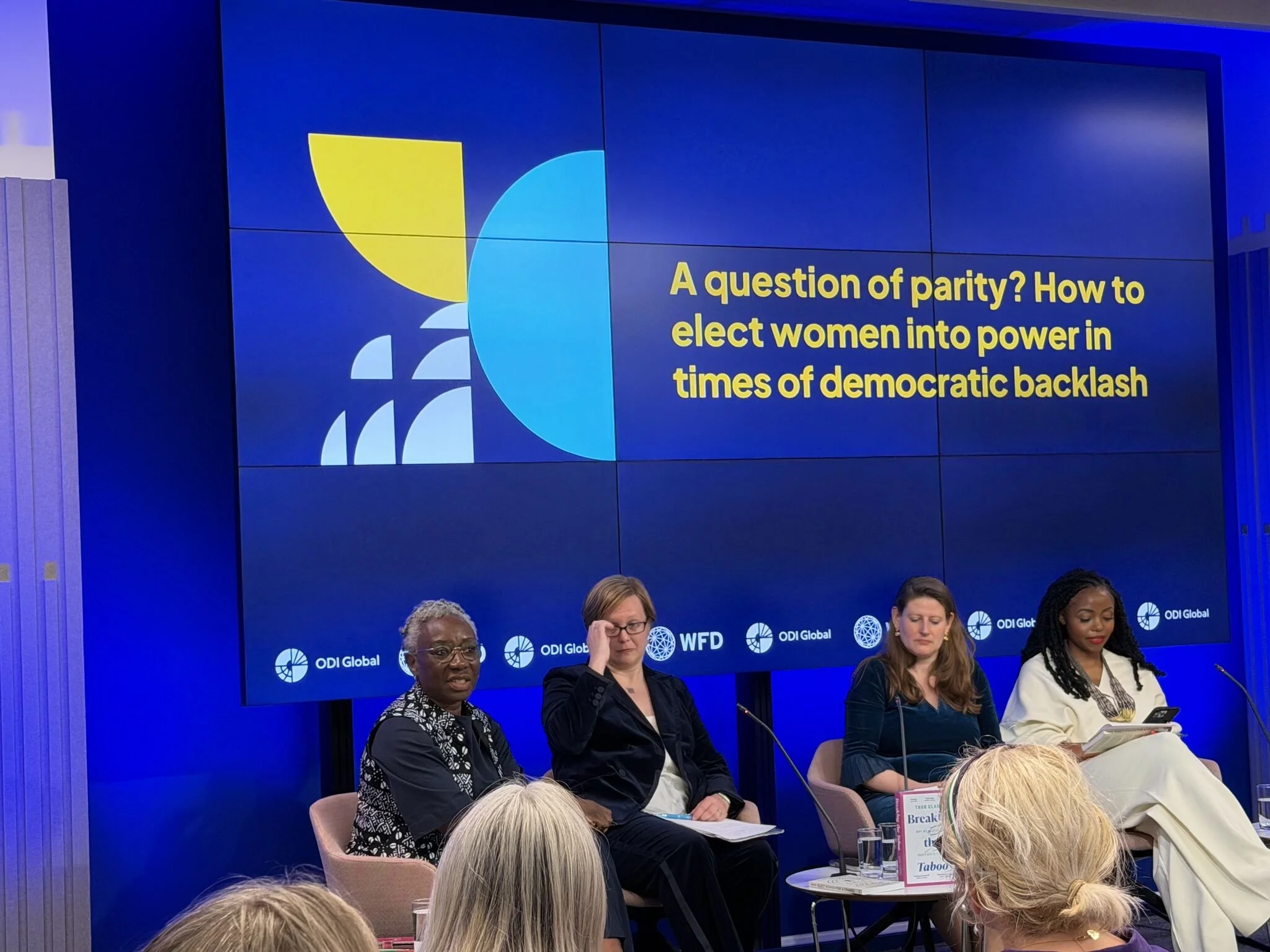
However, I did not fully understand just how systemic these barriers truly are!
Parliament.. is fundamentally not designed for women who are having, or have, young children, as MPs do not have access to statutory maternity leave...
However, I did not fully understand just how systemic these barriers truly are:
For example, Theo Clarke, the former Conservative MP for Stafford from 2019 to 2024, openly discussed the challenges she faced as a new mother in Parliament and how the system is fundamentally not designed for women who are having, or have, young children while serving as MPs. She highlighted this as a significant barrier to women entering politics, as MPs do not have access to statutory maternity leave in the same way as employees in many other roles across the UK. This creates a barrier for women before they even enter the profession.
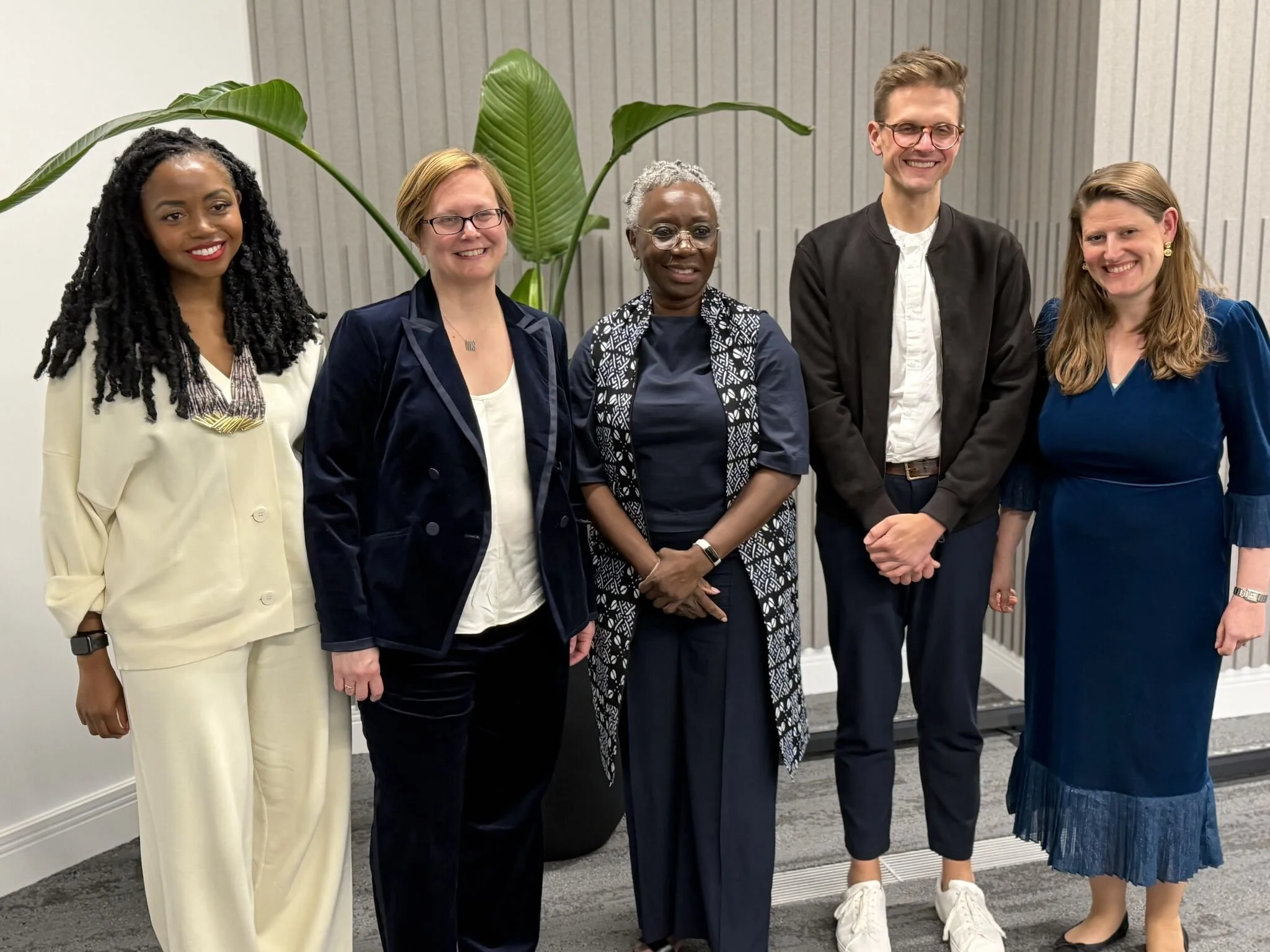
Another topic heavily discussed by the panel was quotas and whether they are fulfilling their role in increasing representation during this period of democratic backlash.
This was the only issue on which the panel was truly divided, allowing for a more debate style discussion and changing the pace of the conversation.
Some panel members argued that quotas are essential in answering the proposed question because they demonstrably increase the number of women in elected office and within the political sphere. Examples from West African nations were used, where quotas have enabled women to sit on decision making boards and panels, while political parties are required to meet targets for female representation during election cycles.
Others disagreed, arguing that women can achieve political office through their own hard work and determination. As panelist Mona Lena Krook discussed, this viewpoint is supported by several Nordic nations, where parity has nearly been achieved without political quotas and instead relies on electoral outcomes alone.
Following this discussion, I found myself leaning towards the use of quotas as a means of electing women during times of democratic backlash.
This is something I support even more strongly following the 2026 local election results, which saw the number of women councillors in England decline. This means that, across the country, the needs and perspectives of over half the population risk being underrepresented in local government.
Despite the strong evidence provided by the Nordic nations, which might suggest quotas are unnecessary, I believe that the principle of gender equality is so deeply embedded within their societies that quotas are no longer required there. In many other nations, however, including those in parts of Africa, quotas continue to play an important role in ensuring representation.
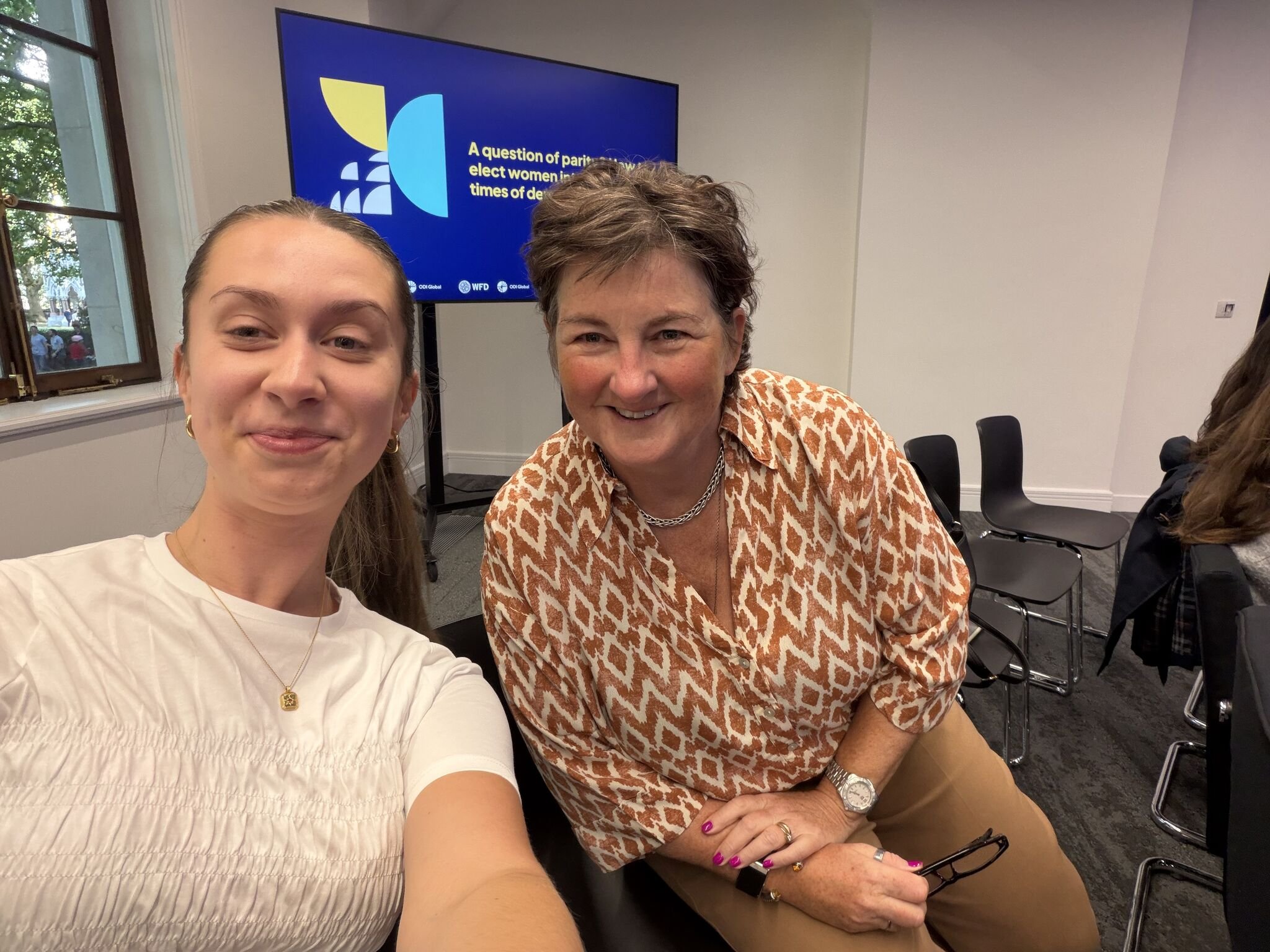
Patricia and I at the event!
I really enjoyed attending this event, as it encouraged me to think more deeply about what needs to be done to achieve parity in British politics and what practical steps are required to make this a reality. For me, seeing the decline in women councillors following the local elections was disappointing. During the campaign, I was fortunate enough to volunteer with my local Liberal Democrats and meet many inspiring women candidates who were entering politics for the first time. It was therefore disheartening to see that this progress was not reflected consistently across the UK.
I would like to thank ODI Global and the Westminster Foundation for Democracy for organising such a thought provoking and enriching event!
Donate today to build women up and improve our politics!
Blog idea or comment piece?
Would you like to contribute to this blog series? We’d love to hear from you. Send us your ideas and let’s chat: community@elect-her.org.uk.