
The Hustings we don’t usually see…
By Honey Millard-Clothier
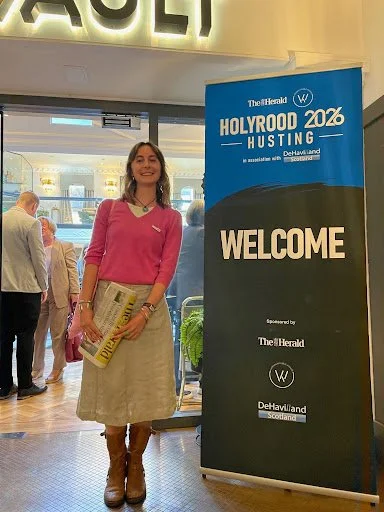
The week before last, I attended a hustings, on behalf of Elect Her, in Glasgow ahead of the Scottish National Elections.
I’m really pleased to be working with the team for the next couple of months!
Sitting in the sun-baked conference room of The Herald, six candidates from across the political spectrum debated an array of issues, from education access to social housing.
Afterwards, the politicians all fielded questions from the audience, radiating that particular buzz found from being in the throngs of an imminent election, which was then under a week away.
However, there was also something else in the air that morning, palpable even as audience members filtered in and candidates mingled over coffee and pastries - conviviality, listening, and laughter. There was a lightness and warmth that settled over the room, and it wasn’t only because of the unseasonably bright April day that streamed through the glass ceiling. The six politicians on the panel were all women, and as a result, brought in a gender make-up to this hustings that has, unfortunately, been rare during this election cycle.
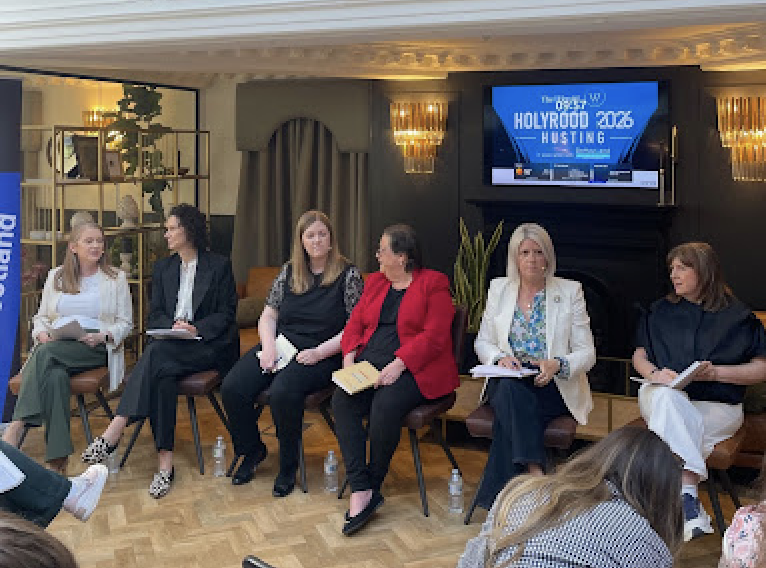
In attendance were:
Shirely Anne-Somervile, Scottish National Party
Wendy Chamberlain, Scottish Liberal Democrats
Gillian Mackay, Scottish Greens
Jackie Baillie, Scottish Labour Party
Sue Webber, Scottish Conservative Party
Kim Schmulian, Reform UK
With an all-male leadership battle for the top spot of First Minister, Holyrood feels as though it has reversed to a stage for performances of political masculinity - adversarial, assertive - often framed as the default style of authority. Yet, it feels that is rarely acknowledged. And it has reinforced that outdated conceptualisation of democratic decision-making as male-only territory, rather than as a collective process that must be shaped, and informed by, Scotland’s entire electorate.
This hustings challenged that.
The decision to platform an exclusively non-male panel at this moment was not incidental, but a way to make visible a contrasting political dynamic that has been often marginalised during this national election.
Co-hosted by The Herald and Women in Public Affairs, this hustings challenged the status quo of who the electorate - 51% of whom are women - usually see and hear in political spaces. But this hustings did more than simply rebalance representation; it set a new tone for how political conversations should be conducted.
When Gillian Mackay was asked how the Scottish Greens could reform childcare policies in Holyrood, she resisted the pull of party-point scoring. Instead, she replied that truly meaningful reform would require the whole of parliament working together. The nodding of heads across the panel let this statement hang in the air for a moment, diffusing into the room and into all the voters keenly watching.
Consensus, rather than conflict, was the undertone of this hustings.
Of course, disagreement is both expected and necessary in a political debate such as this. But the nature of that disagreement felt markedly different. Rather than political verbal warfare that sacrifices productive conversation for the sake of ‘being right’, the disagreements I witnessed that morning were considered and professional. Instead of outright rejecting each other's views, the panellists made concerted efforts to build off one another’s distinct party values and priorities. No interrupting, no dramatic facial expressions, and, ultimately, no nonsense. As one audience member aptly put it during the Q&A: “what a breath of fresh air this is. Thank you”.
When opening the hustings, Catherine Salmond, the Editor of The Herald, was immediately clear about one thing. This was not a ‘women’s event’ for ‘women’s issues’. This would not be a reproduction of the all-too-often relegation of ‘soft’ or ‘feminine’ policy issues to women politicians, on the assumption that they are inherently more suited to resolving them.
Whilst, indeed, all policy areas - from the economy to social welfare - carry gendered effects that may disproportionately impact women’s lives, the responsibility for addressing these should not be offloaded in ways that rearticulate gendered inequalities - issues should not be the burden of one gender or another.
Instead of leaning into this tendency, this hustings allowed these politicians the space to explore how policy areas intersected with gender, but without the confines of solely debating this. As Salmond chaired the hustings, I felt these gendered roles that pervade many other panel discussions ebb away, and a refreshing stream of productive, wide-reaching debate flow in.
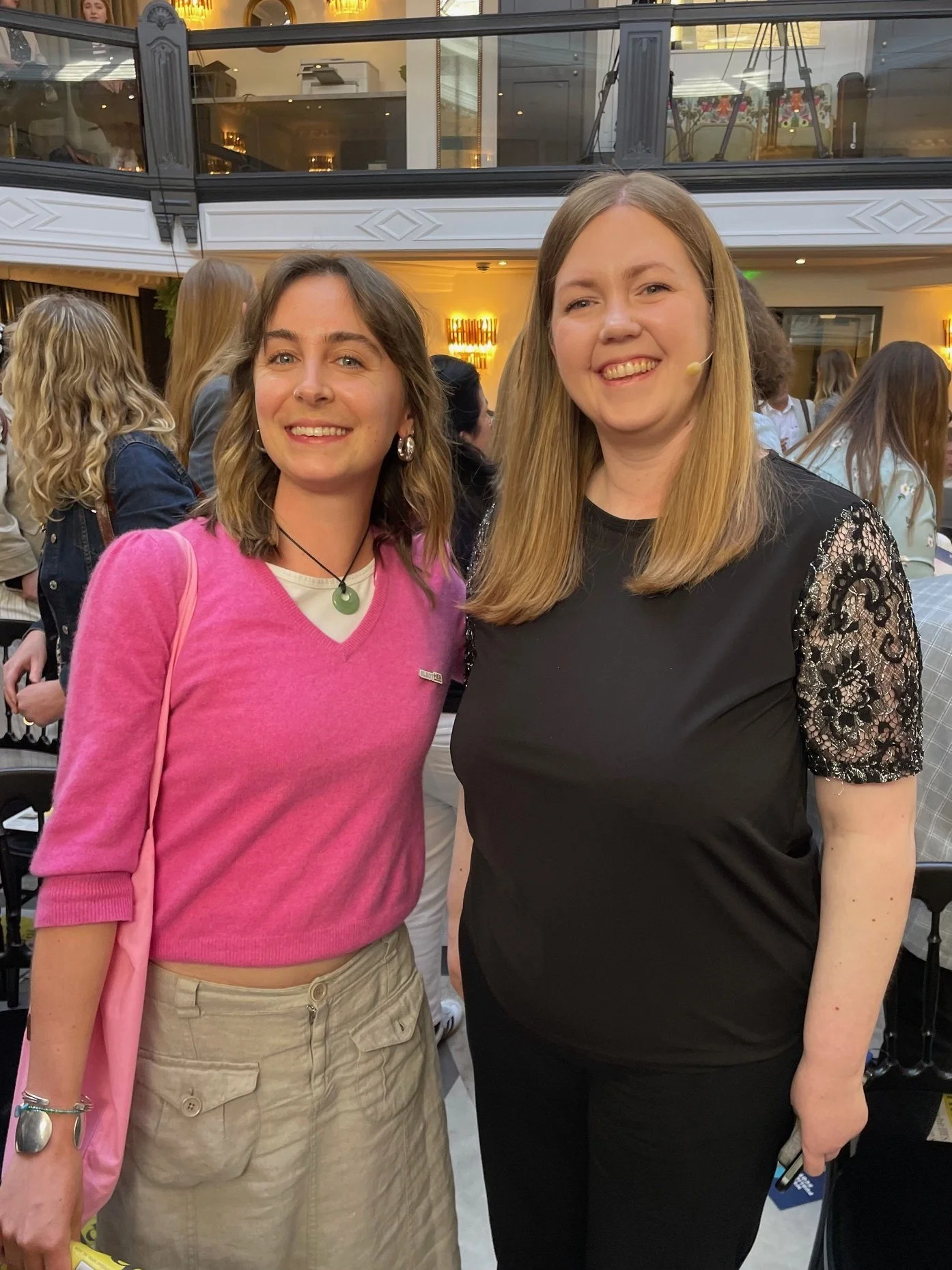
Ultimately, this showed me that we must recognise that gender representation is not only about who is seen, but about how politics is practiced.
The uplifting environment of this hustings suggests that more gender-diverse political spaces can foster forms of disagreement that are less combative and more generative. Achieving this is not to make conflict absent, but to rework it into something that builds, rather than erodes.
As a young woman, attending this hustings allowed me to momentarily envision a democratic process that expands, rather than obstructs, that was inclusive and demonstrated varied representation and conduct. While each politician offered a different route to policy change in Scotland, I did not leave feeling a sense of division or isolation. Instead, what stayed with me was the unifying impact of seeing people like myself move through political space with powerful confidence, aspiration, and leadership.
But this recognition cannot end at observation. Democracy is not something witnessed from the sidelines, but instead it is something that we all actively shape. The possibility glimpsed in that bright room - of a politics that is kinder and more attentive - depends on who shows up, and who is supported to lead. For me, that means not only valuing gender-diverse representation in abstract terms, but acting on it.
On May 7th, as on any election day, participation is an active, and privileged, choice we can each make about the kind of political culture we want to live in, and who we trust to build it.
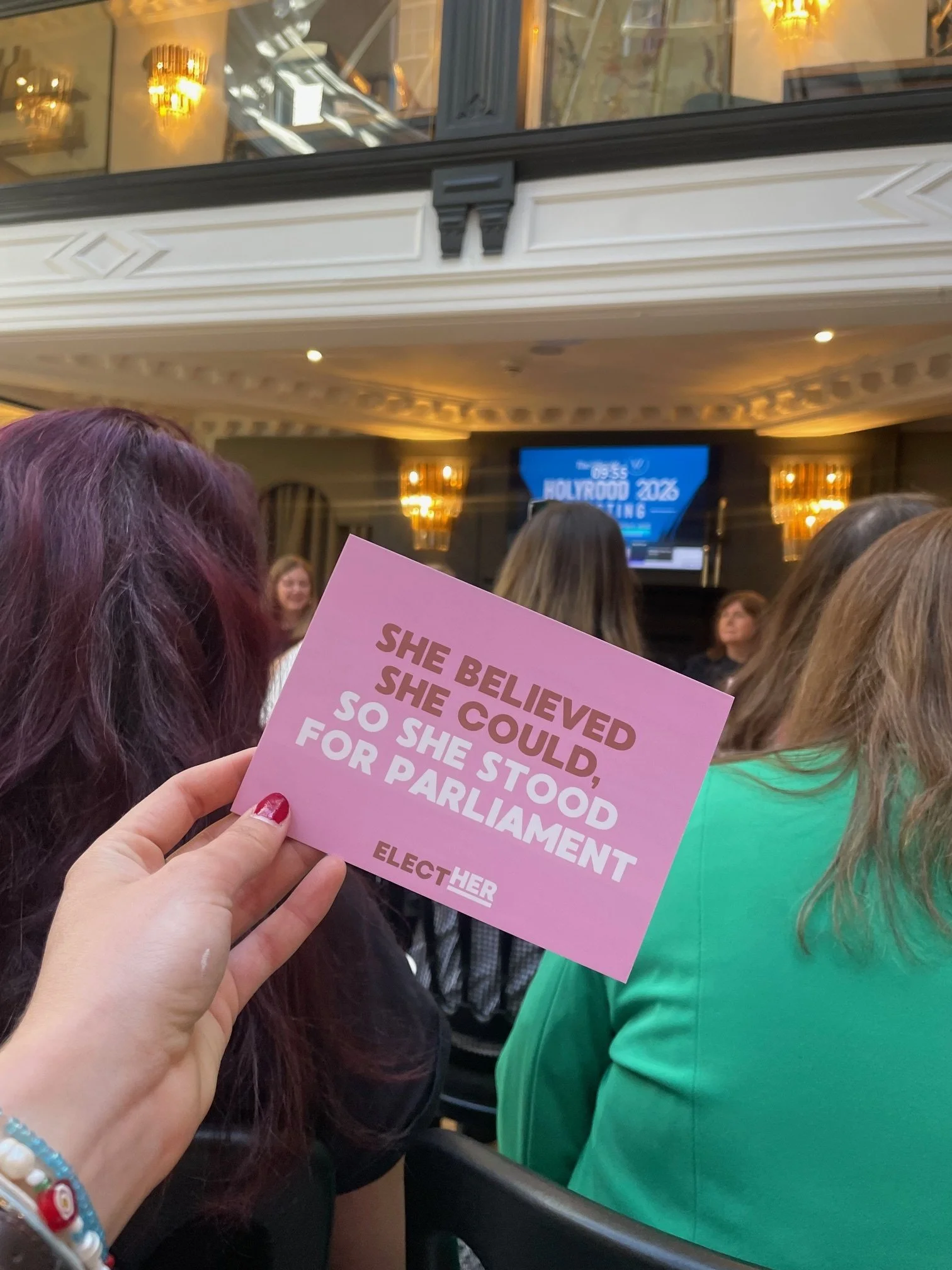
Donate today to build women up and improve our politics!
Blog idea or comment piece?
Would you like to contribute to this blog series? We’d love to hear from you. Send us your ideas and let’s chat: community@elect-her.org.uk.