
Sixty-seven votes: what standing alone taught me about local democracy
By Dr Kusum Singal
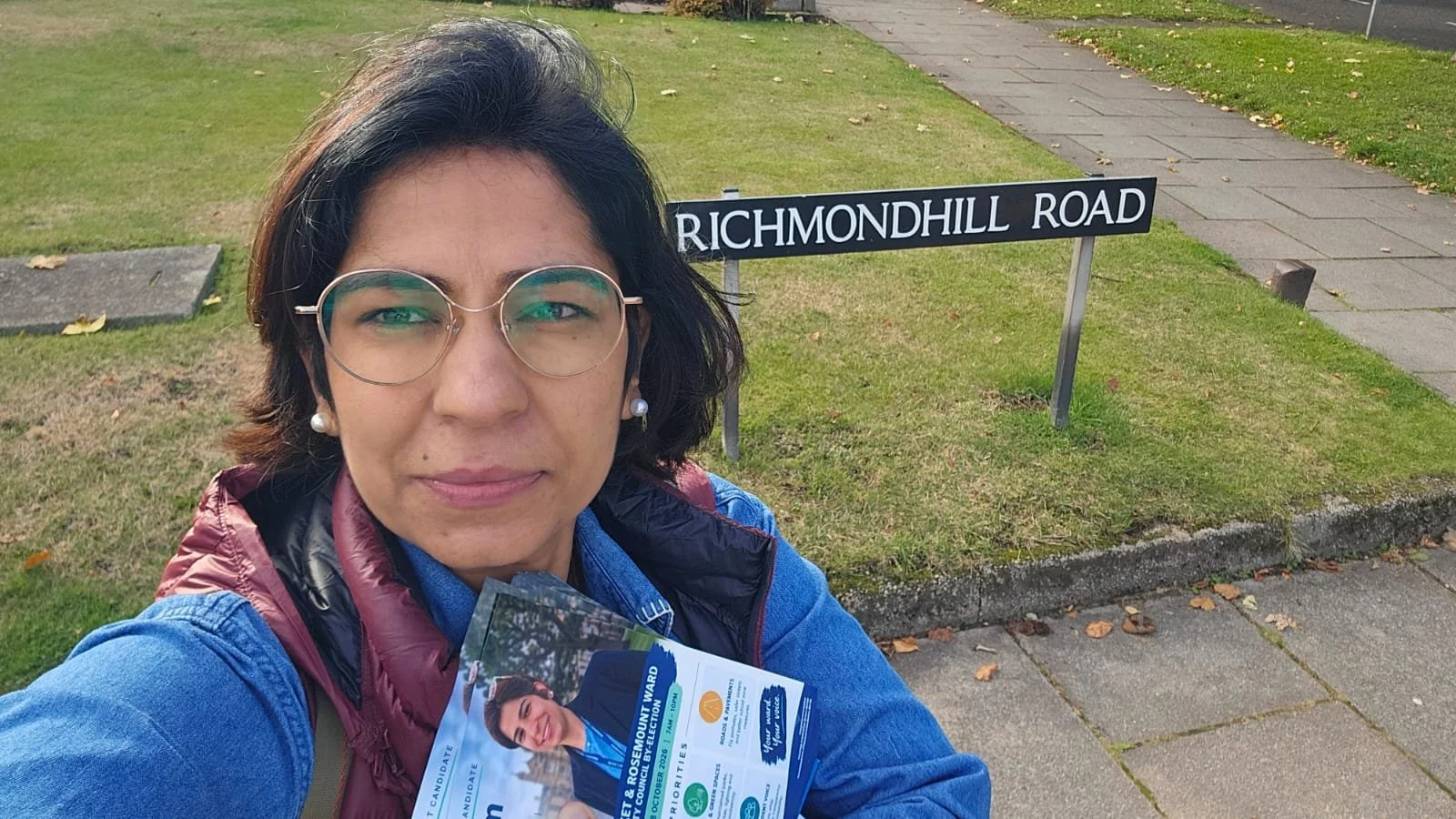
"Hello, my name is Kusum Singal.
I'm standing in the by-election."
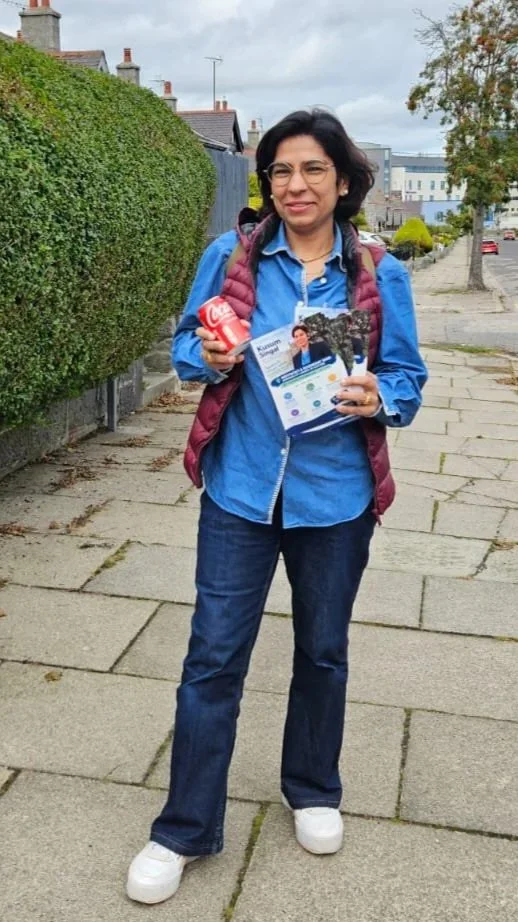
I must have said those words hundreds of times this autumn. On doorstep after doorstep in Rosemount and Midstocket, I introduced myself from scratch. There was no party rosette on my coat and no team waiting at the end of the street. It was just me with a bag, with a water bottle and a few leaflets, in a city I had called home for barely four years.
I came to Scotland from India as a researcher and a mother in Sept 2022. I never imagined that one day my name would be printed on a Scottish ballot paper. On count night for the Midstocket and Rosemount by-election, I knew well before the end that I hadn't won. I finished seventh of eight candidates, with 67 first-preference votes.
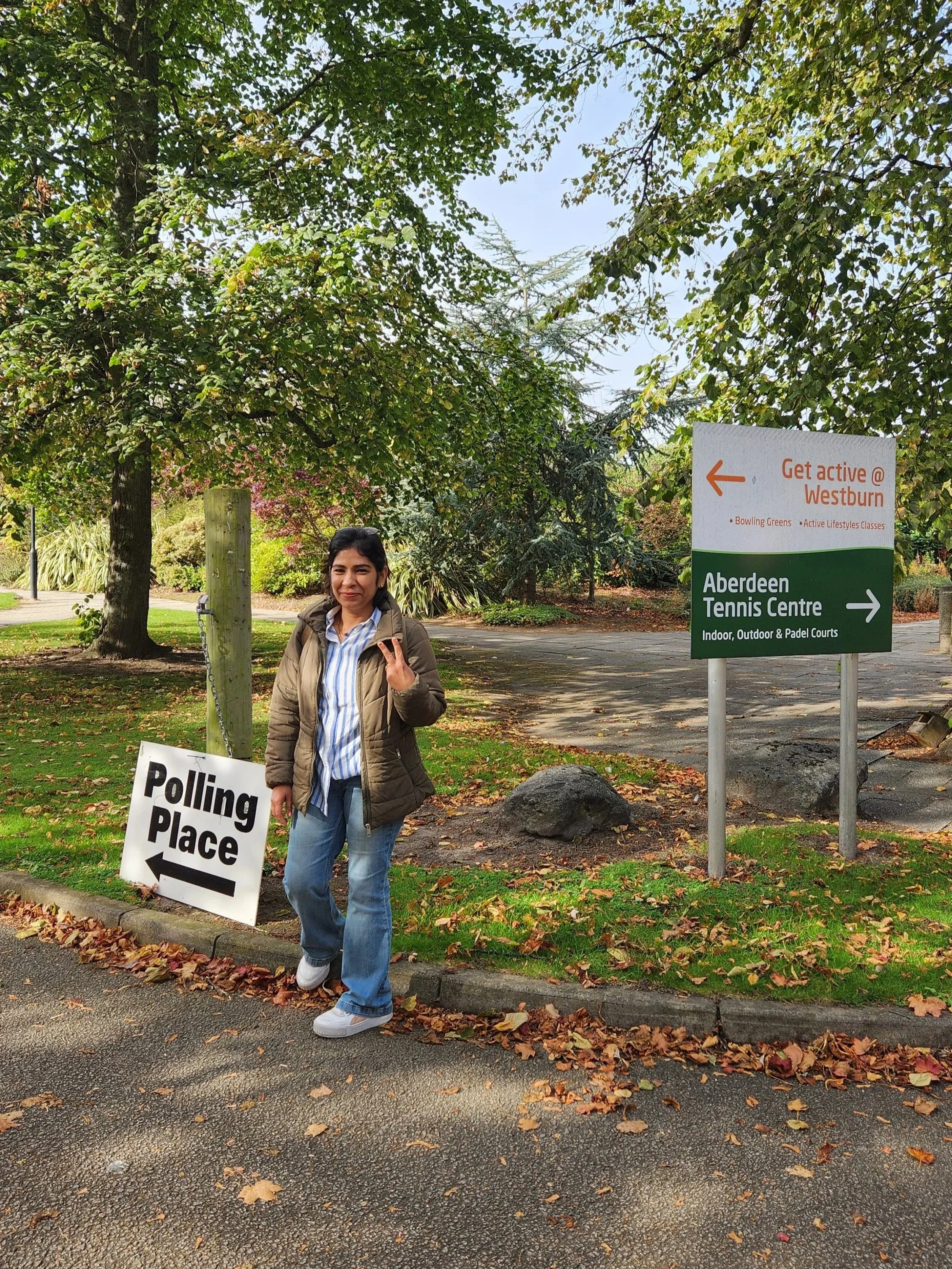
I want to start with that number, because women are too often encouraged to hide the parts of our stories that don't flatter us. Sixty-seven is not a big number. Every one of those votes went to a woman who, only a few months earlier, had never stood for anything. No party. No agent. No volunteers. Barely four years of calling Aberdeen home. This is how I came to be on that ballot paper and why I don’t regret a single conversation: on doorsteps, along the paths of Westburn Park and Victoria Park, and across the counters of our local shops.
Sixty-seven people read my leaflet, stopped me on a doorstep, or watched a short video about parking, and decided I was worth their vote.
That is where this story begins, not where it ends.
This is the story of how a first-time, independent, migrant woman ended up on that ballot paper, and why I don't regret a single door.
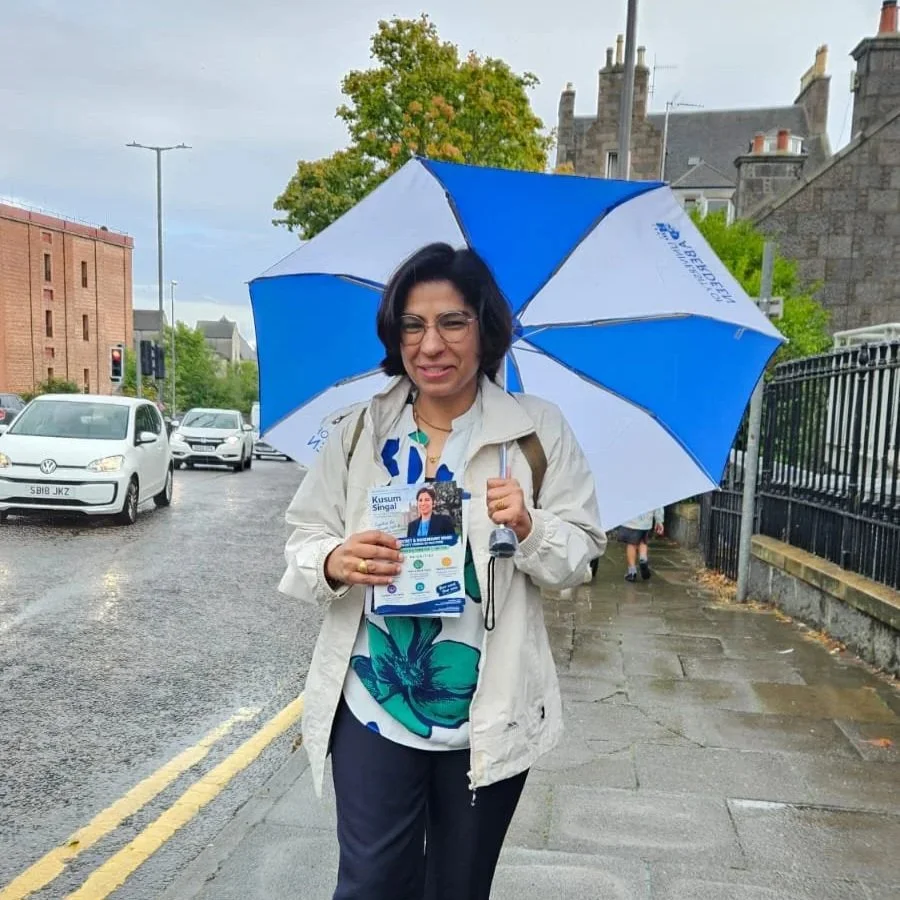
Why I stood
I'm a public health researcher. My job is evidence: reading the research, weighing it honestly, and telling decision-makers what it really says. I'm also a mother of two, and a migrant woman who came to Scotland from India.
For years, I have worked as a researcher, looking at data and writing about the exact ingredients that make communities healthier, safer, and stronger. But at some point, academic writing wasn't enough.
I had to ask myself a much harder question: Was I willing to step out from behind the spreadsheets and become one of the people who makes actually those decisions?
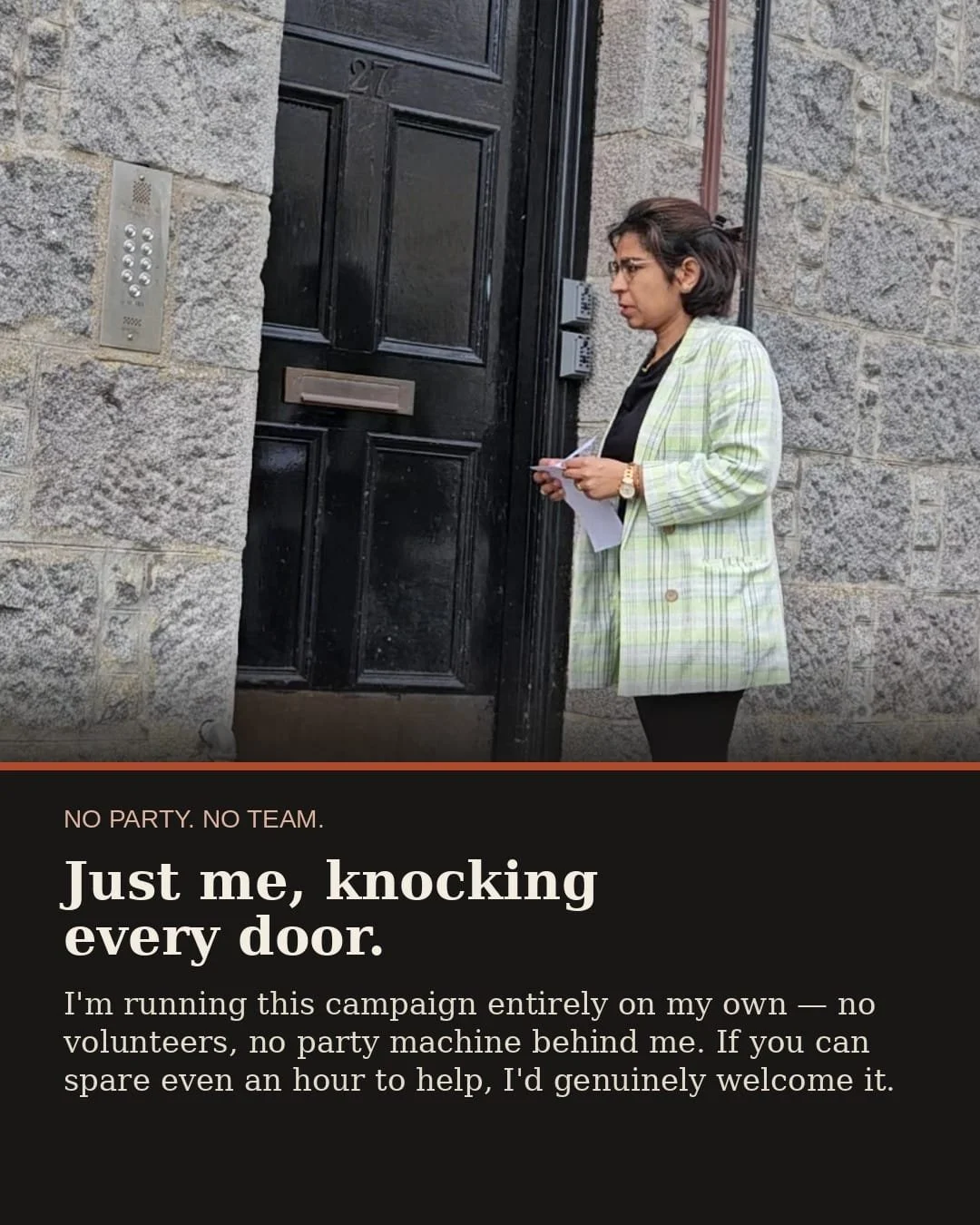
Doing it alone
Most candidates have a machine behind them.
I had a pair of comfortable shoes and a Facebook page I set up on 13 September.
In this race, I was my own election agent, campaign manager, designer, social media team and leaflet deliverer. I quickly discovered a harsh reality of local government: council by-elections do not get the free Royal Mail delivery that parliamentary candidates receive.
Every single leaflet that reached a letterbox in this ward got there because I personally walked it there.
I visited the community centre and wrote to every local group, from the community council to the Men’s Shed. On the evening of the candidates' hustings, I went straight to the event the moment my son's birthday party finished. Standing up to speak that evening proved to me exactly who I am fighting for: the next generation growing up in our ward.
But I wasn't entirely alone. I had Elect Her. The Fund Her grant paid for real things, but it gave me something more important: proof that someone thought a first-time, independent, migrant woman candidate was worth backing. When you are doing everything alone, that matters more than I can easily explain.
What surprised me most was what actually worked. My best-performing post in the first week wasn't a policy statement. It was a short video about parking, which reached around 2000 people, more than double most of my other posts.
People don't engage with candidates. They engage with problems they recognise from their own street.
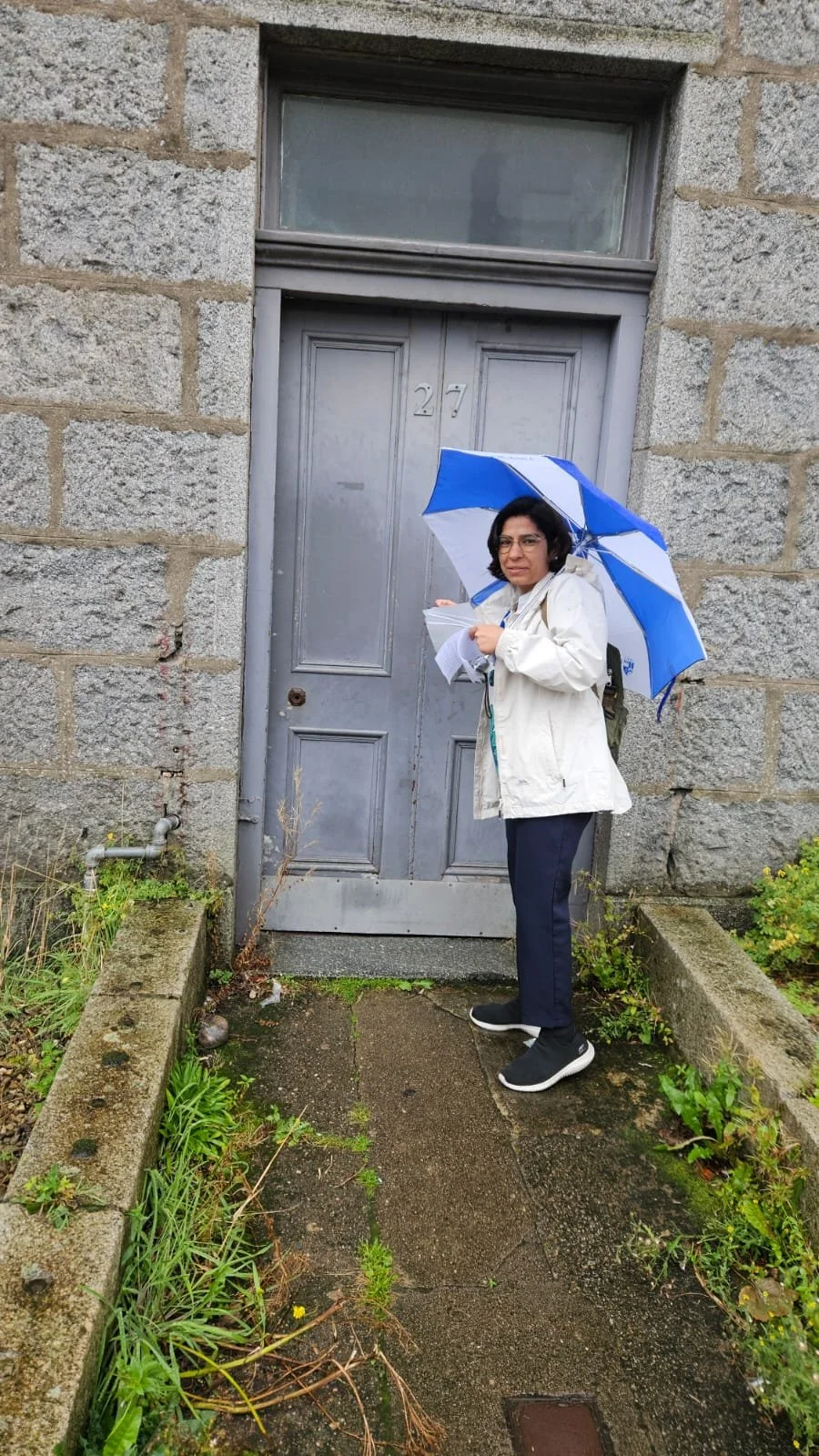
What the doorsteps told me…
If you want to understand a ward, knock on its doors.
Here is some of what Midstocket and Rosemount told me…
Bins came up on street after street: overflowing communal bins, and armchairs, mattresses and televisions dumped beside them. I reported some myself.
In my notes it became "the same story", just a different street name.
Older residents told me the move to app-only parking payment had left them behind. People attending funerals at a local church struggled to pay to park at all. A system that looks efficient on a spreadsheet can quietly shut out the people least able to complain.
A business owner who had traded in Rosemount for twenty years told me her shop had been closed for about a year after flooding. She was still waiting on insurance and still receiving bills.
Others raised infrequent buses at commuting times, e-bikes, a neglected park, access to the community centre, and why the new maternity hospital still hadn't opened.
And one resident told me, kindly but firmly, that independents hardly ever win, and that if they do, they get no budget to change anything. I didn't argue on the doorstep. I wrote a public post answering it instead, because it was a fair question that deserved a fair answer.
None of these issues is glamorous. All of them are about whether ordinary life works. In my research, we call them the determinants of health. On the doorstep, people just call them "my street".
If you're a woman thinking of standing
Especially if you think you're too new, "not from here", or without the right connections, here is what I'd tell you.
Start earlier than you think you need to. I started late, and time is the one resource you can't crowdfund.
Don't do it entirely alone. Even one person to deliver leaflets or double-check your paperwork changes everything. Ask before you think you need to.
Lead with streets, not slogans. What connected with people was a specific problem in a specific place.
Learn the rules early. Check whether your job is politically restricted, what your leaflets must legally say, and what support you're entitled to.
Say yes to support. Organisations like Elect Her exist so you don't have to work everything out by yourself.
Decide in advance what winning means. For me it was being heard, learning how local democracy really works, and knowing my ward better than I did. By that measure, I won something.
What comes next?
The election is over. The issues are not. The bins will still overflow next week, and the parking app still won't work for someone's grandmother.
I'm keeping my Facebook page going as a place for local issues, and I'm exploring how to turn what I learned into something lasting for the community.
To the 67 people who voted for me: thank you. You voted for someone who had to introduce herself at every single door. Whatever I do next, I'll need fewer introductions.
Your ward. Your voice. It was never just a slogan
Donate today to build women up and improve our politics!
Blog idea or comment piece?
Would you like to contribute to this blog series? We’d love to hear from you. Send us your ideas and let’s chat: community@elect-her.org.uk.