
By Patricia Seabright
Artificial intelligence is reshaping our democracies and our lives. But unless women help shape its development, legislation and governance, it risks becoming another powerful force that reinforces the inequalities we have spent generations trying to overcome.
I heard Gráinne Seoige speak and met her at the Vienna TEDAI. She is an Irish TV journalist and broadcaster, who stood for election to the Irish Parliament.
And I was struck by how urgently we need to confront the implications of artificial intelligence for women’s equality and political participation!
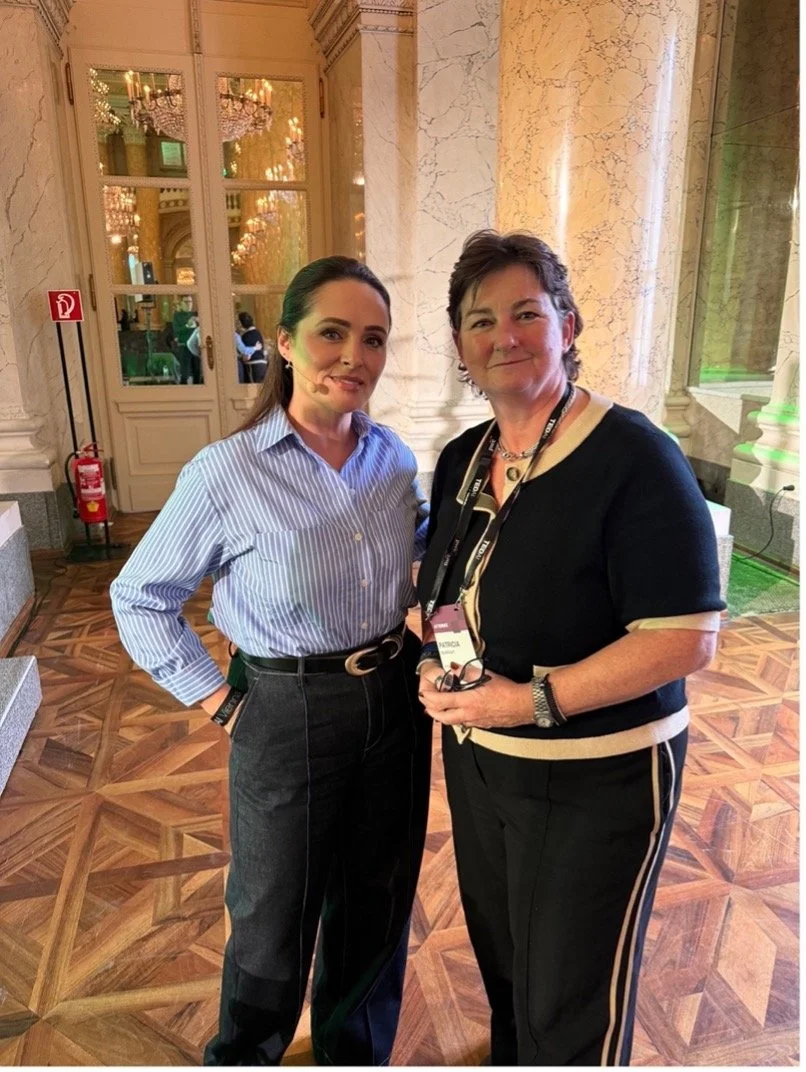
Her experience brings the issues into sharp focus.
During Ireland’s 2024 general election campaign, Seoige, stood as a candidate in Galway West, and became the target of an AI-generated pornographic image that was circulated on WhatsApp.
The image was fake.
The humiliation, distress and consequences were not.
In January 2026, Seoige spoke about the trauma she had experienced, describing how she had tried to suppress what happened and continue campaigning. She subsequently spoke about how the abuse had profoundly affected her and warned that the technology could deter women from entering public life. She also highlighted the difficulties in identifying perpetrators and securing effective action
This is not simply a story about online deepfake pornography or the misuse of technology. It is a story about power and misogyny. When a woman standing for election can be subjected to sexualised digital abuse, with images circulated beyond her control, the consequences extend far beyond her personal suffering. Such abuse can damage reputations, intimidate candidates, silence voices and discourage other women from seeking public office. Girls watching this unfold may also absorb a chilling message: that visibility, ambition and public participation come at a price.
If AI can be used to make political participation more dangerous for women, then its governance is fundamentally a question of democracy and equality.
This is not to lose sight of the fact that AI also offers extraordinary opportunities: improving access to information, supporting public services and helping citizens engage with political decisions. But these benefits cannot be separated from the risks. Systems developed without sufficient understanding of women’s experiences will reproduce existing biases, while tools capable of generating abusive imagery can be deployed at extraordinary speed and scale.
The response from technology companies, governance and legislation has too often been too slow and inadequate to severity of the harm. Having spent two years recovering from the trauma, Seoige is now campaigning for the necessary changes. She has challenged companies and policymakers over the ease with which such imagery can be created and distributed, and the difficulty victims face in getting effective remedies.
This is why women must stand up and be counted. They must be in the room, not as an afterthought, a consultation exercise or a token presence, but as politicians, legislators and decision makers. Women must participate in designing AI systems, setting safety standards, drafting legislation, overseeing regulators and deciding how violations are investigated and punished. Their experiences must inform the rules before harm occurs, not merely after victims have been left to pick up the pieces.
Governments must establish enforceable responsibilities for developers and platforms, rapid and accessible removal procedures, effective investigations and meaningful consequences for those who create and distribute abusive material. International cooperation will also be essential because digital abuse crosses borders with ease.
Meeting Gráinne Seoige at TEDAI I was struck by her bravery. She talked about how she is seeking to make this issue real to people, to personify it, because behind every debate about algorithms, innovation and regulation are real women and girls whose lives can be decimated by decisions made elsewhere.
The question is not whether women should have a voice in shaping AI. It is, why any society would allow a technology with such profound consequences for women’s rights and democratic participation to develop without them.
Women must be in the room when the future is being built. And they must have the power to change what happens there.
———
Donate today to build women up and improve our politics!
Blog idea or comment piece?
Would you like to contribute to this blog series? We’d love to hear from you. Send us your ideas and let’s chat: community@elect-her.org.uk.