
Getting In Is Only Half of It! What an internship taught me about women, politics & staying power.
By Emily Mulholland

I came to Elect Her as a Master’s Public Policy student who has spent a great amount of time reading and writing about how institutions work in theory.
Yet I had never seen, first-hand, what actually holds our democracy together on a daily basis.
From the outside, whilst strongly supporting the need for more women in politics, it can become easy to view this as percentages on a report.
Spending time around Elect Her’s work has made this matter more hopeful to me in a way that five years studying politics hadn’t.
Behind every statistic about women's political representation is a real person who noticed a problem and cared enough to act on it.
During my internship I got to see how Elect Her works to bridge gaps in gender representation and in understanding the realities of local and national politics. The insights I have gained into the real process of legislation and the elected representatives they support have been particularly useful to me.
Their work to “demystify” a traditionally opaque sector gives women in their community a much clearer understanding of how they can engage with it. I already understood, in principle, that people can’t campaign for or confidently engage with a place in politics without knowing what that place is. Though I hadn’t seen what that looks like in practice. Elect Her hands women the specific, practical knowledge of the system rather than expecting women to get through the process alone.
The “pipeline problem” is not due to a shortage of capable and passionate women but to a lack of encouragement to enter the space in the first place and then have enough support to stay there.
Through the Be a Councillor workshops, I got to hear the encouraging stories of various women’s journeys into politics, each one different, and learn about women’s lived experiences with political roles, which is a sentiment I will be left with long after my internship.
The “pipeline problem” as Elect Her discusses, is not due to a shortage of capable and passionate women but to a lack of encouragement to enter the space in the first place and then enough support to stay there.
From my perspective as an intern, the impact of this community and the multitude of programmes built to help fellow women was unmissable. The councillors themselves highlight the balance of rewarding yet daunting feelings that come from being a woman in politics - whether that was as the only female in a room or not fully understanding what a role would demand before taking it on.
Set against that was the knowledge gained, the satisfaction of helping their community and the respect they had earned for a job well done.
Beyond those emotional reflections was a more practical picture too: weekly committee meetings, papers to read before Monday, informal sessions where councillors question emergency services directly, Saturday surgeries and a fiercely protected Sunday. Nobody sits on every committee, so the load gets shared.
And more than once, someone in the room pointed out how much of the job simply comes down to time, how much canvassing alone eats up, and how quietly that filters who can actually afford to stand. None of that gets said in a campaign leaflet. It's exactly what non-partisan workshops like this exist to say instead.
Public policy courses spend a lot of time on the idea that a good policy solution and an adopted policy can be two entirely different things.
Public policy courses spend a lot of time on the idea that a good policy solution and an adopted policy can be two entirely different things!
A proposal can be fully worked out, evidence-based and ready to go, and still go nowhere, because the thing that was actually missing was never the solution, it was the political will and the coalition needed to carry it through.
Sitting in on coalition calls tied to a Lords briefing on the Representation of the People Bill was the first time I watched that distinction play out in real time.
Several groups, each with their own fully worked out set of amendments, were operating in parallel on one piece of legislation. By the time I came across this, its own amendments were already settled with draft legislative wording, ready to hand to any peer's office that wanted it, on questions like protecting candidates' home addresses by default rather than on request.
The challenge was no longer simply deciding what the policy should be, but finding the people, relationships and political support needed to give those proposals a route through Parliament.
Having the right answer ready doesn't always get you onto that busy agenda. Having a peer in the room, briefed and willing to put their name to it, does!
There was one aspect of my time that sits less easily alongside these hopeful experiences, and it came through the conversations I had which highlighted the harassment women in frontline politics face.
Listening to organisations work through safety amendments, and hearing what already-elected women live with day to day, the abuse and the precautions, I had to accept that demystifying the process and building a woman's confidence to stand isn't where the barriers stop.
What struck me most is that "getting more women into politics" and "keeping women safe once they're in politics" aren't the same policy problem, even though they're often discussed as if they are.
The first is largely an access and information problem, the kind workshops and mentoring are well designed to solve.
The second requires changes to the environment women enter once they get there.
Solving the first problem doesn't fix the second. A woman can clear every access barrier a workshop helps remove, stand, and win, and still enter a system where safety remains an ongoing challenge. That's the barrier, which is still being worked through, long after a woman has already won.
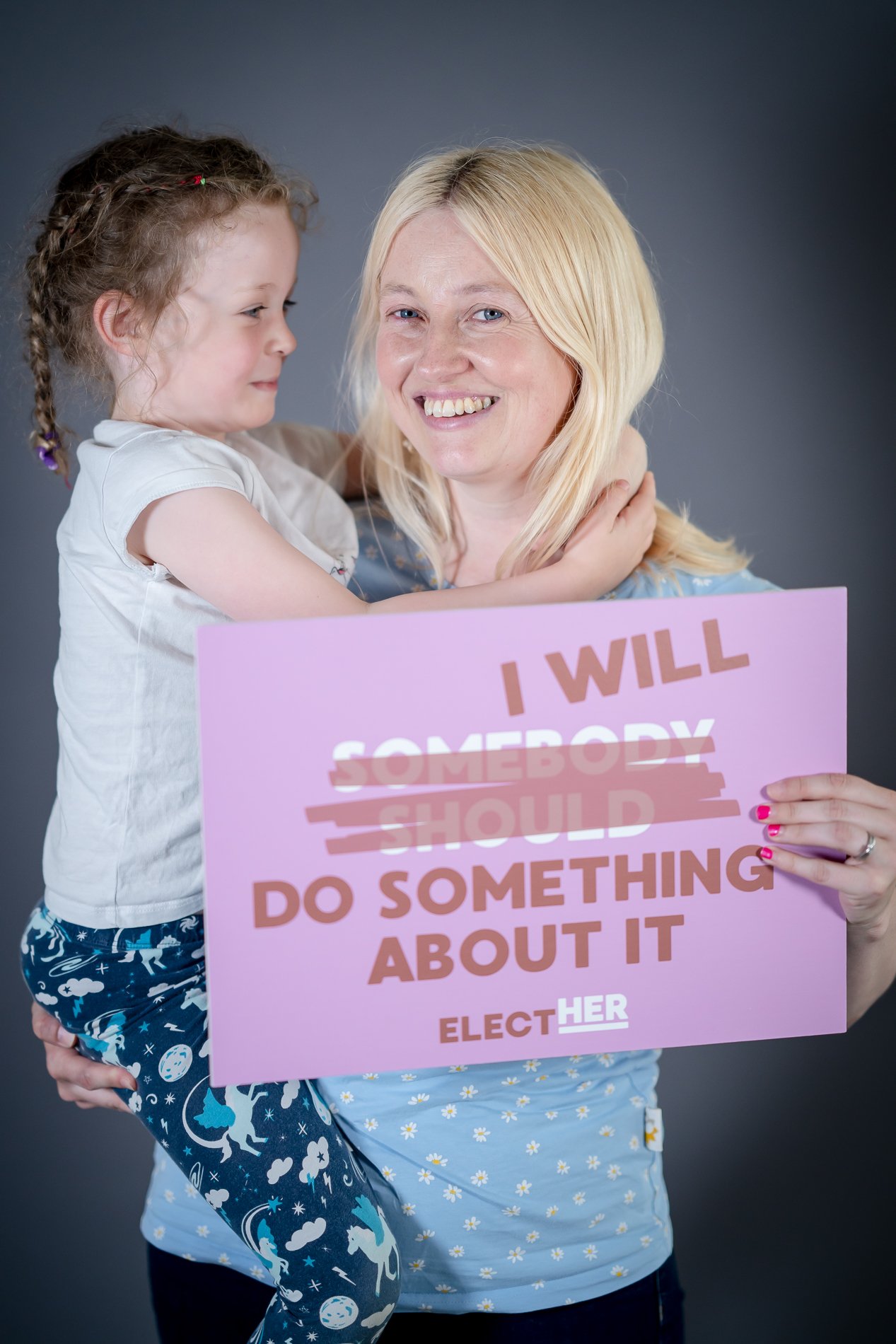
What I found particularly refreshing was that politics doesn’t have to be defined by hostility.
At Elect Her, I saw women from different political backgrounds come together around a shared interest in improving their communities and supporting more women to participate. Party differences do not disappear, but they do not prevent people from listening to one another and sharing experiences.
I saw something similar in the coalition work surrounding the Representation of the People Bill. Different organisations brought different priorities and expertise to the same piece of legislation, working alongside one another to turn shared concerns into practical proposals.
It was a useful reminder that political progress does not always have to look like opposition. Sometimes it looks like people with different perspectives finding common ground to work together.
That sense of community was perhaps the biggest thing I will take away from my time at Elect Her. The women I encountered were not all pursuing politics in the same way, nor did they necessarily share the same political views. What they shared was a willingness to support one another and make space for each other's experiences. In a political environment that can often feel adversarial, seeing that was both unexpected and encouraging.
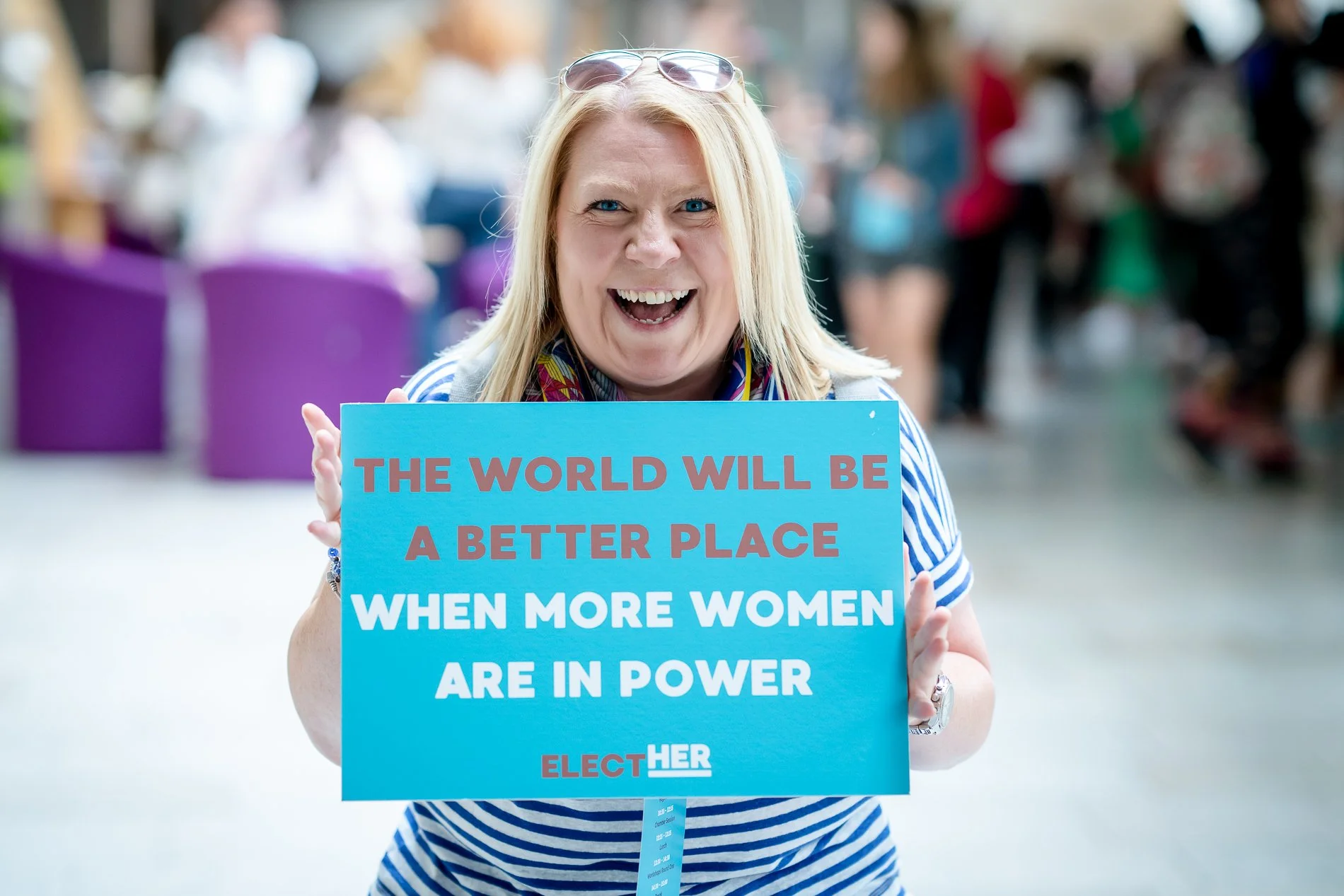
This experience has shown me that creating a community where women feel that there is a place for them once elected is just as important as preparing them with the confidence and knowledge beforehand.
Donate today to build women up and improve our politics!
Blog idea or comment piece?
Would you like to contribute to this blog series? We’d love to hear from you. Send us your ideas and let’s chat: community@elect-her.org.uk.